How to Find a Book Niche That Sells on Amazon KDP
On this page
- Why lots of books is not enough
- Step 1: Pick a broad topic you understand
- Step 2: Narrow it to one reader and one need
- Step 3: Check that page one sells
- Step 4: Count how many books are new
- Step 5: Find the busy months
- Step 6: Make sure you can stand out
- A worked example: large print word search
- What can go wrong
- How NicheWise does this faster
A niche is a group of books for one kind of reader with one need. "Cursive handwriting workbook for kids" is a niche. "Journals" is a broad topic, and it is too wide to compete on.
To find one that sells, check three things before you write a word: whether the books on page one sell, whether new books sell there too, and which months buyers turn up. You can do all three in a browser, for free. This guide is for self-publishers on Amazon KDP, from a first low content book to a tenth novel. It covers the first step of selling a book on Amazon in depth.
Why lots of books is not enough
Most people pick a niche by scrolling through Amazon and noticing where there are lots of books. That works about as well as picking a restaurant because the street is crowded. The crowd might be there for good food, or for the view. You need to know who is buying and who is already serving them.
One caution before the steps. Amazon does not publish how many people search for a phrase, so no tool can tell you that, NicheWise included. Any "searches a month" number is a guess. What you can see is how the books on page one actually sell, and that is what this guide comes back to.
Step 1: Pick a broad topic you understand
Start wide, with a topic you know as a reader or a buyer: puzzle books, kids' activity books, cookbooks, a fiction genre. Knowing the reader matters more than any number later on. You will spot a weak cover or a missing angle faster in a topic you already buy from.
Check it yourself: write down five broad topics. Cross out any where you could not name what a buyer wants from the book.
Step 2: Narrow it to one reader and one need
A broad topic becomes a niche when you can say who the book is for and what it does for them. "Word search" is a broad topic. "Large print word search for seniors" is a niche. "Bible word search in large print" is narrower again.
Check it yourself: type your topic into the Amazon search box and read the suggestions that drop down. Those are phrases shoppers type. Write down the ones that name a reader or a need.
Step 3: Check that page one sells
Search your niche on Amazon and open the first page of results. Look at each book's Best Sellers Rank, on the book page under Product details. If most of them sit in the tens of thousands or better, buyers are turning up. If most sit in the millions, they are not.
Rank moves all day, so look at a few books on a few different days before you trust a number. A single book with a great rank and nine books with poor ones means one book sells, not the niche.
Step 4: Count how many books are new
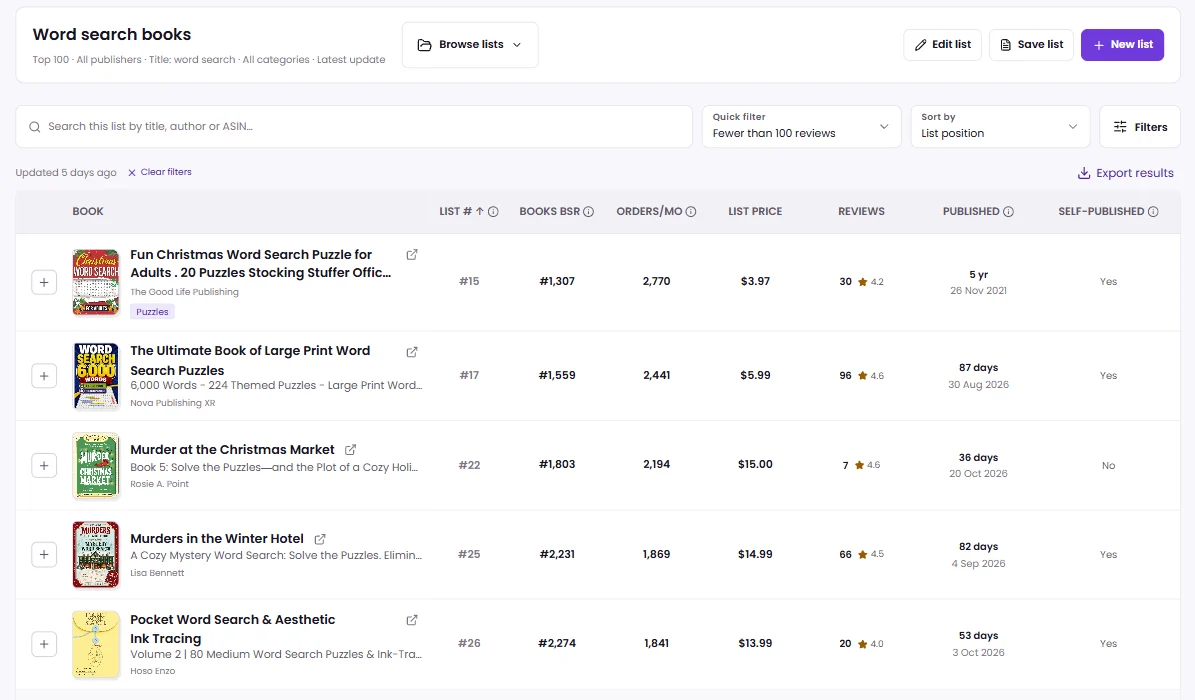
Count the books on page one that came out in the last 12 months. If a third or more are new, the page is open to a newcomer. If every book is four years old and has thousands of reviews, a new book starts a long way behind and has to be clearly different to catch up.
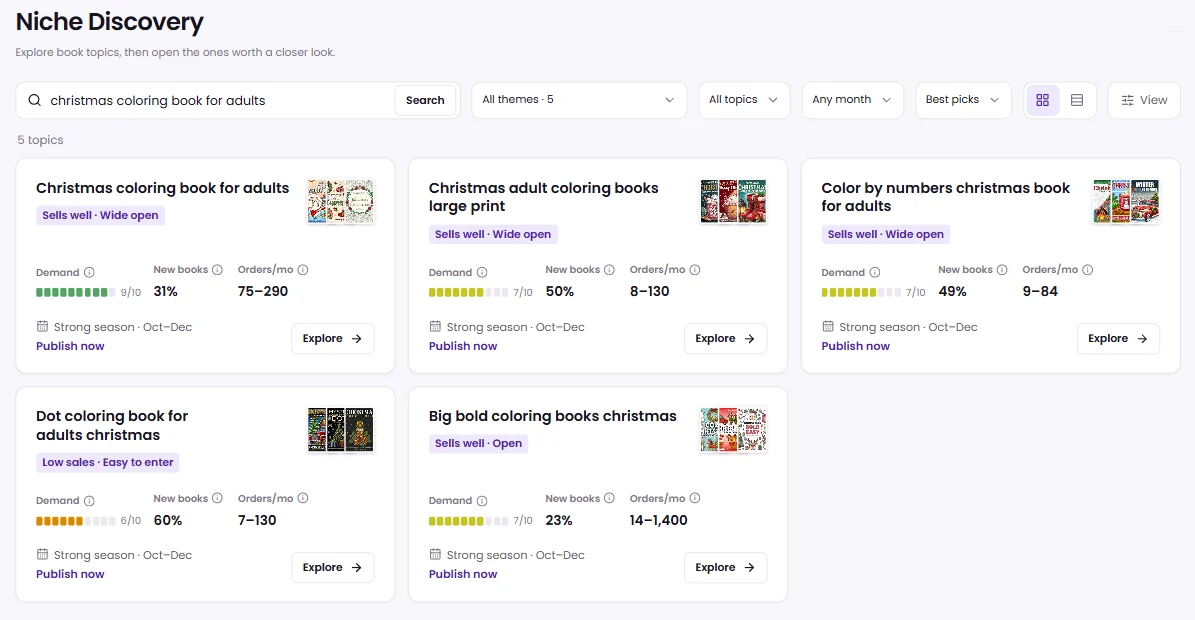
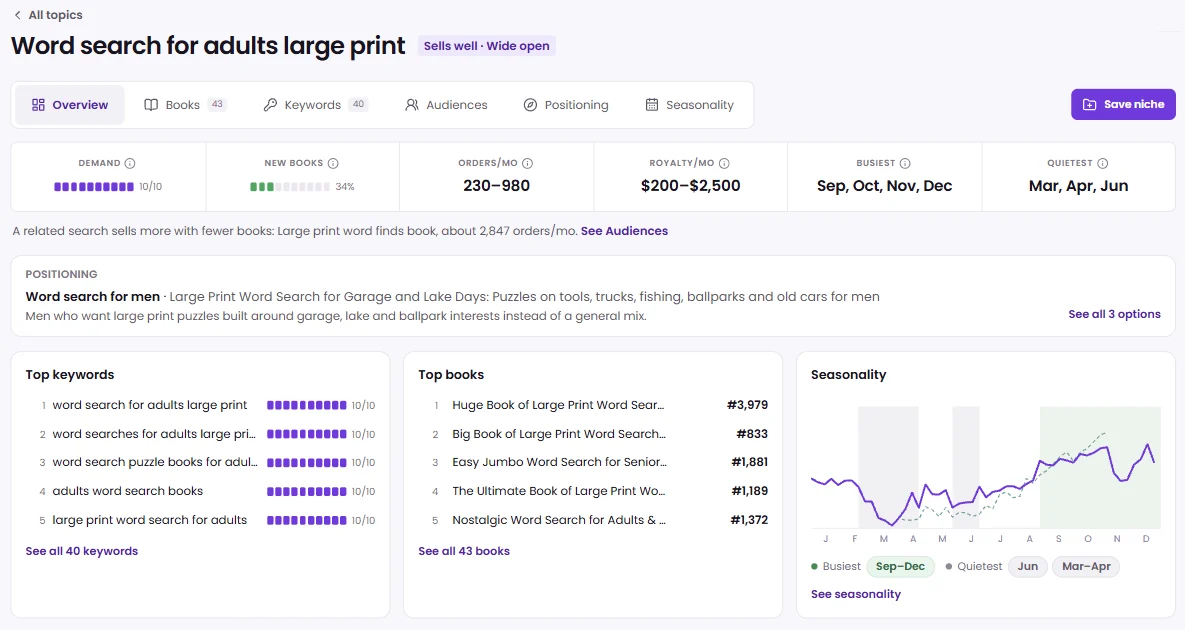
In NicheWise this is the New books figure, and the chip reads "Wide open" when plenty of new books sell.
Step 5: Find the busy months
Some niches sell about the same all year. Others have a busy stretch. Cozy fall books peak in September and October, so a book meant for that peak has to be live by early August. Miss it and you wait a year.
Check it yourself: look at the publish dates and the review dates of the top books. A run of reviews every autumn and quiet springs tells you when buyers come.
Step 6: Make sure you can stand out
A niche can sell, be open to new books and still be wrong for you. Read the one and two star reviews of the top three books. They list what buyers wanted and did not get: print too small, puzzles too easy, recipes that need hard to find food. If you can fix one of those, you have a reason to publish.
A worked example: large print word search
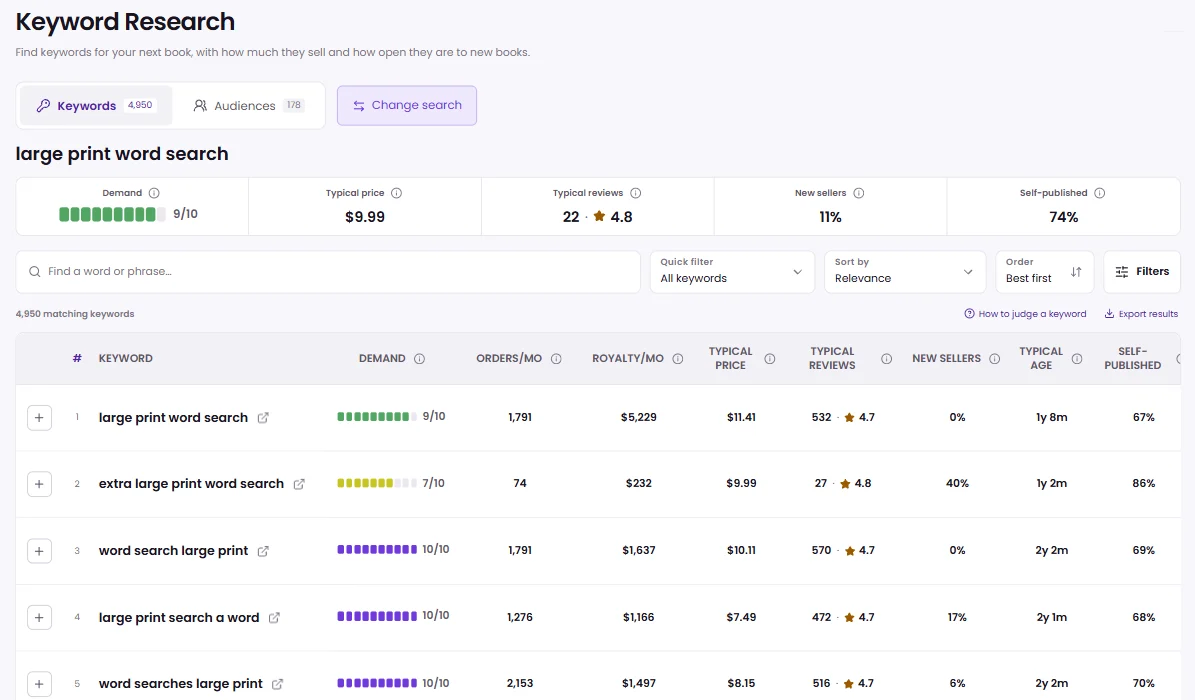
A search for "large print word search" in NicheWise turns up a handful of niches. Three of them show why the checks above matter.
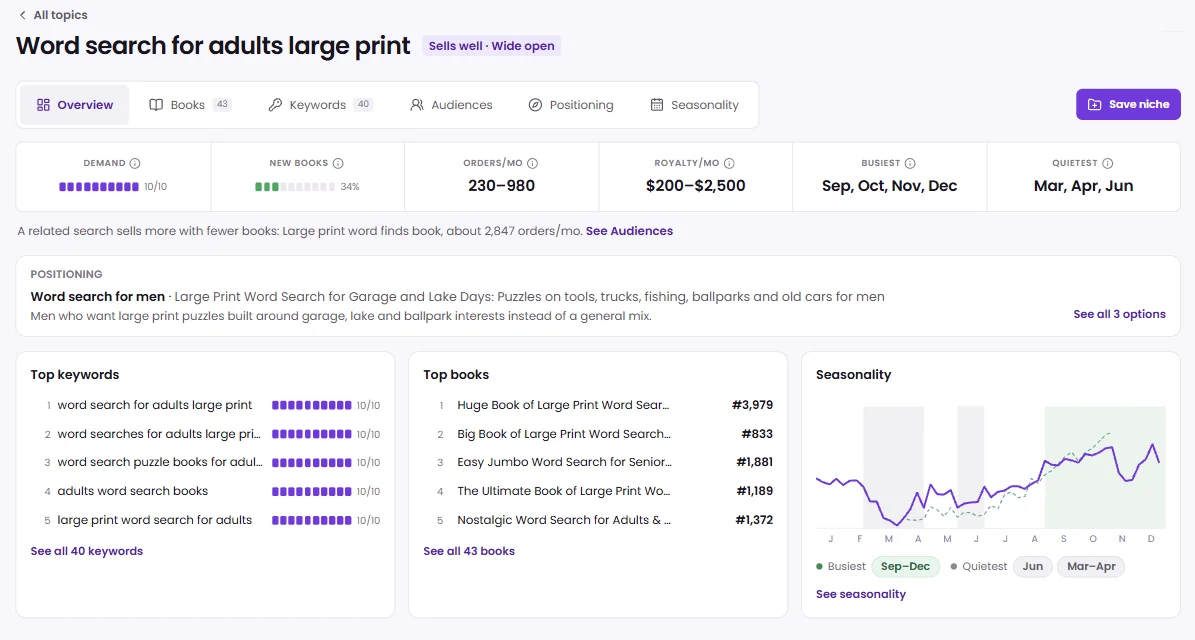
- Word search for adults large print: Demand 10 out of 10, and 34% of the books on page one are new. NicheWise shows it as "Sells well · Wide open". Books sell, and new ones sell too. This is the pairing to look for.
- Large print hymns word search: Demand 7 out of 10, but only 15% of the books are new. "Sells well · Crowded". Buyers are there, but older books with many reviews hold page one.
- Large print word search animals: 56% of the books are new, but Demand is 5 out of 10. "Low sales · Easy to enter". Getting onto page one is easy. Selling once you are there is the hard part.
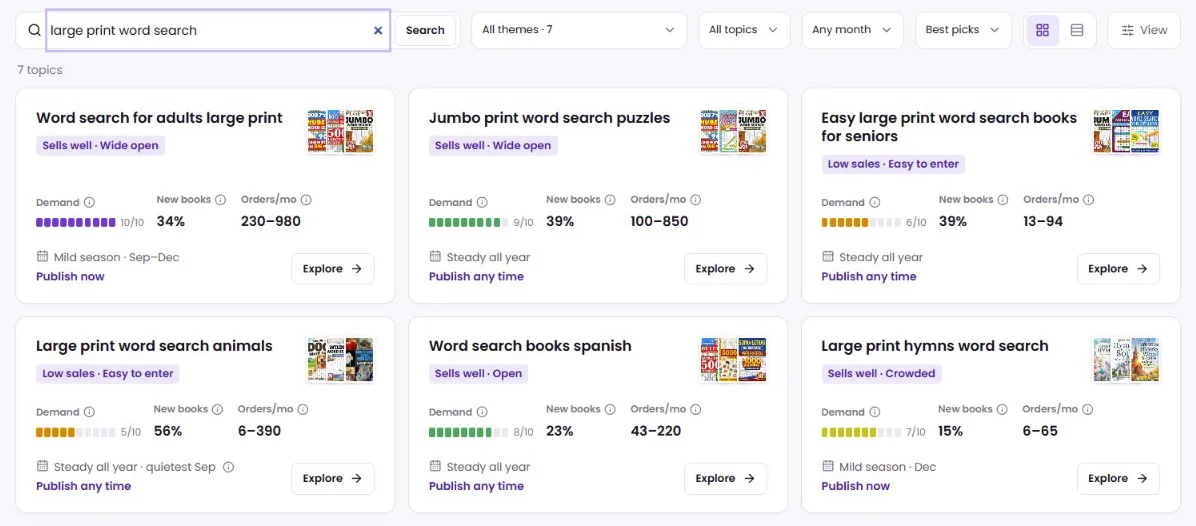
All three are word search books in large print. Only one passes all three checks.
What can go wrong
Every sales figure on Amazon is an estimate, worked out from rank. It is close enough to compare niches, not to plan your rent. A niche with only a few months of history has less to go on, so check it again a month later. And a missing figure means no figure was found, never that a book sold nothing.
How NicheWise does this faster
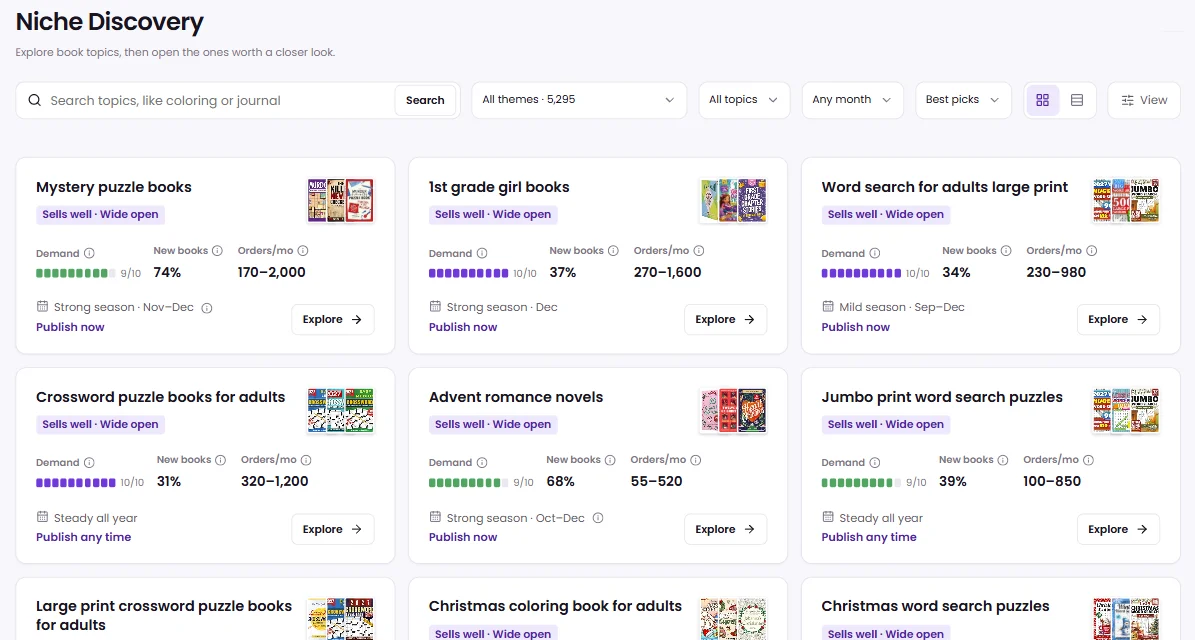
The checks above take ten or fifteen minutes per idea. Niche Discovery runs them across hundreds of niches at once and shows each one as a short line you can sort: how well it sells, how open it is to new books, and its busy months. When a niche looks good, save it to your Niche Library to keep its books and keywords together.
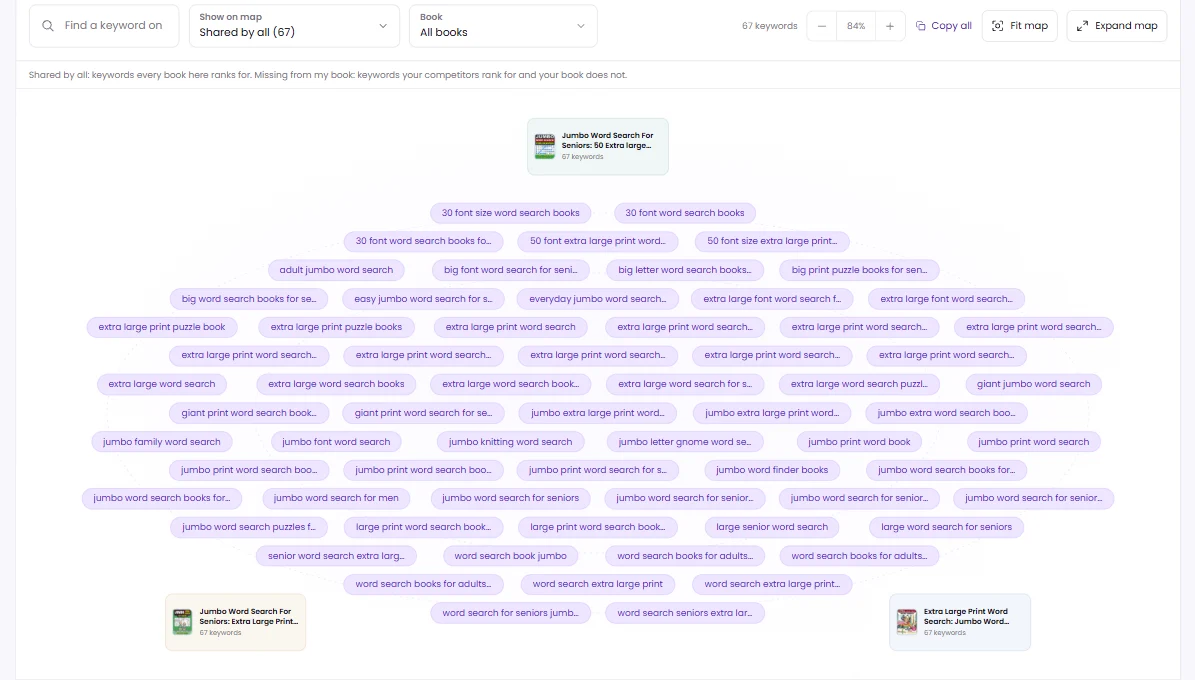
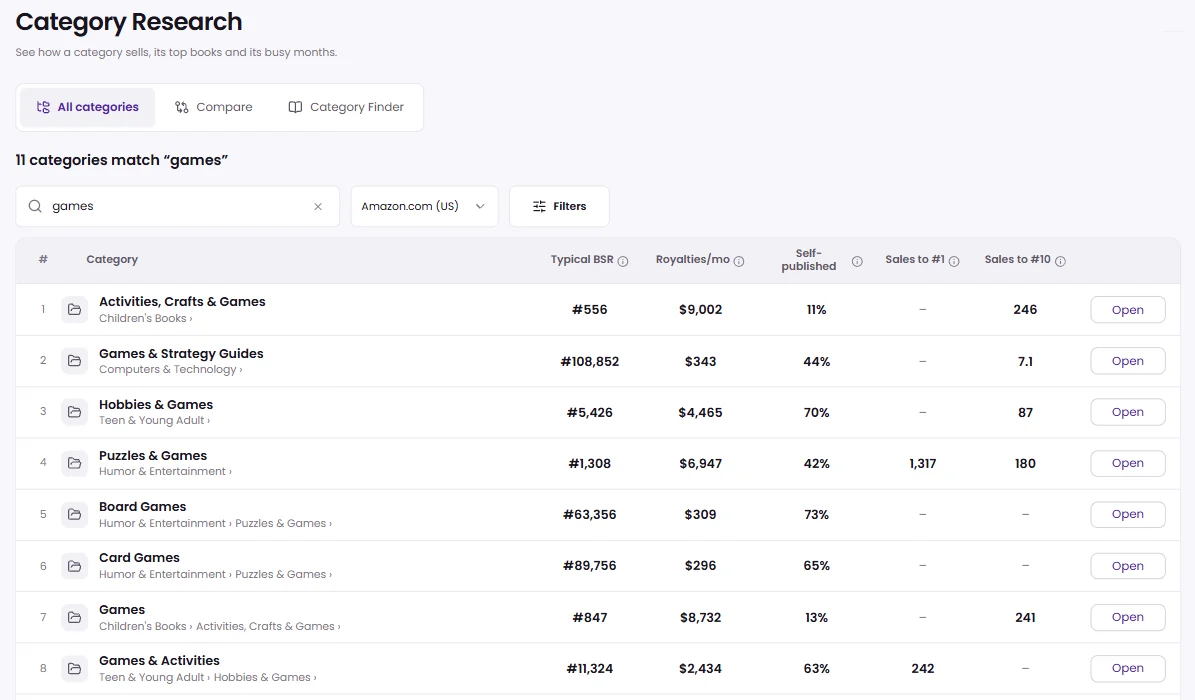
Once you have a niche, the next steps are to find the words its buyers type, see what the top books are found for and pick categories that fit the book.